Caring for a Terminally Ill Pet — A Gentle Guide to At-Home Hospice Care
When comfort begins to matter more than cure, a new kind of care begins. Pet hospice is about making the remaining days pain-free, well nourished and deeply loved.
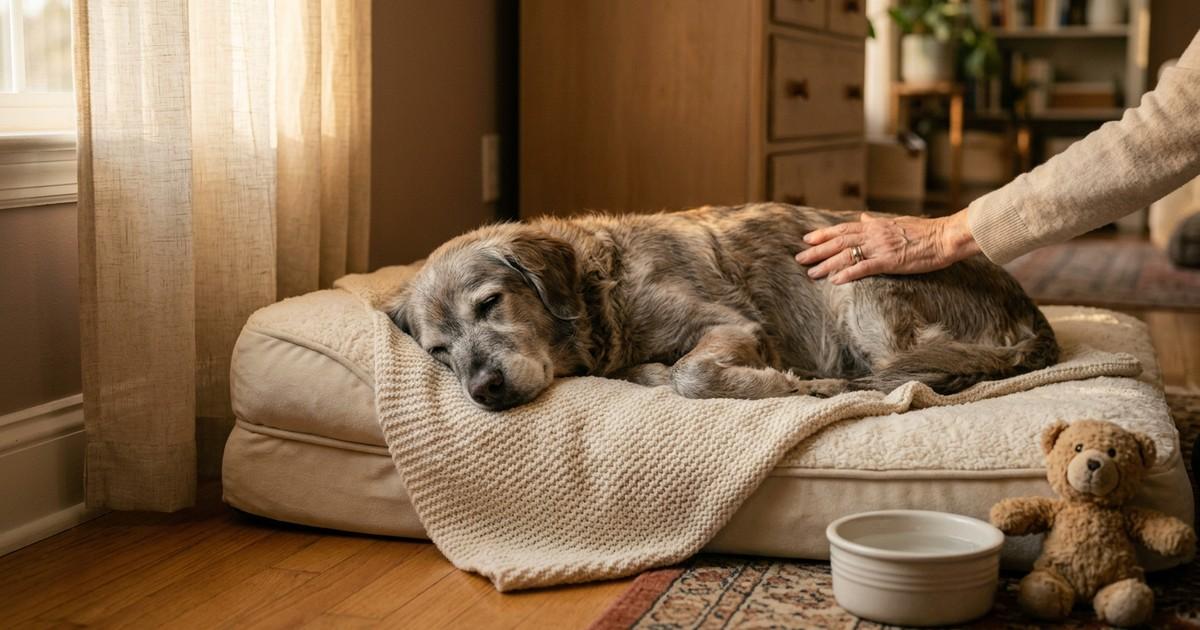
There comes a moment when your veterinarian starts talking about comfort instead of treatment. After the tests and the appointments have run their course, what remains is time — and how you spend it together. From the day of that diagnosis, you carry two kinds of grief at once: the pain your companion endures, and the farewell you know is coming. Hospice care is the work of keeping the days in between as warm and gentle as possible.
Hospice care is not giving up
Stopping curative treatment does not mean stopping love. The goal of pet hospice — also called palliative care — is not to extend life at any cost, but to protect the quality of the time that remains. Managing pain, preserving appetite and easing discomfort are active, hands-on work. With your veterinarian’s help, pain control, appetite support and relief from side effects all remain real options. The goal has changed; what you can do for your companion has not.
Make home the most comfortable place on earth
Most of a terminal illness is lived at home, and small adjustments can transform your companion’s day:
- A soft, supportive bed — lying down for long hours aches. Provide cushioned bedding and clean pads you can change often.
- Traction underfoot — rugs and mats on slippery floors protect weakening legs. Clear the paths they walk most often.
- Food and water within reach — when eating becomes an effort, every saved step matters. Bowls raised to head height can help, too.
- A quiet, warm spot — choose a low-traffic corner away from noise, and adjust for the season so they are never cold or overheated.
A daily log is your best guide
Between vet visits, a few brief notes about each day make appointments far more productive. Jot down how much they ate and drank, their bathroom habits, how they walk, and whether they seem to want to hide. Pain often hides instead of howling — refusing food, a changed posture or retreating to a quiet corner can all be signals. Counting good days against hard days sounds simple, but it is the single most useful record for understanding when a decision needs to be made.
Your time together is medicine
Even when long walks are over, there is still so much you can do: sitting together in a sunny window, slow gentle strokes, a single bite of a favorite treat, speaking in the same easy voice as always. To your companion, your presence is the most reliable comfort of all. And remember — while you are caring for them, you are also grieving in advance. Missing someone who is still here is a natural, painful part of this road. Talk to family and friends, and do not carry it alone.
Preparing to say goodbye is part of caring
When the hard days begin to outnumber the good ones, set aside time to talk it through with your veterinarian. Choosing the moment of farewell is not a betrayal — it is the final extension of a love that refuses to let suffering have the last word. Look back on everything you did together: the repeated trips to the clinic, the nights spent keeping watch by their side. That record is the proof of how loved they were.
Pet World exists so that your companion’s trace never fades — a place to keep memories together. Gather the photos and videos you captured during the days of care. When the missing grows heavy, our AI can gently recreate your companion in photos and letters from the memories you share — and we will always honestly tell you that these are AI-created images. Fill the remaining time with love, the way you have all along, and let Pet World share the remembering that comes after.