Planning a Pet Funeral: Types of Farewells and How to Prepare
The loss always arrives too soon, but the farewell itself can be prepared with care. A calm guide to the types of pet farewells and the steps, in order.
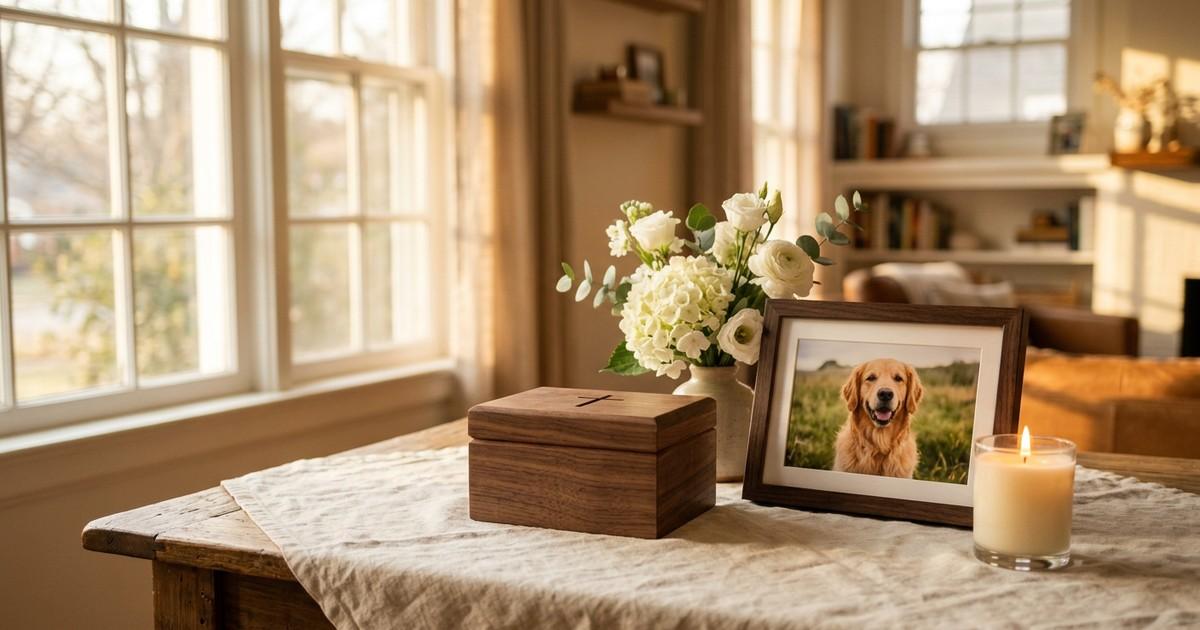
The moment we say goodbye to a pet always arrives too soon. And yet, in the middle of grief, practical questions appear almost immediately: where to keep them until the ceremony, what kind of farewell to choose, how many days we have to prepare. This guide walks through the main options and the order of the steps, so that at least the logistics can feel a little calmer.
A funeral is for the ones who remain
A funeral is not about formality. It is a way of acknowledging, out loud, that a real life was part of your family: a chance to say the last words, and to share the sadness with the people who understood what that animal meant. Preparing it step by step can itself become part of healing — every decision is another way of saying “you mattered, right up to the end.”
The main types of farewell
Cremation — individual or communal
Cremation is the most common choice. With an individual cremation, your pet is cared for alone, the ceremony is held just for them, and the ashes are returned to you. A communal cremation costs less, but the ashes are not returned. Deciding in advance how you want to keep the ashes makes the choice easier.
Burial
Depending on where you live, burial at home may be allowed or not, and dedicated pet cemeteries exist in many regions. Rules differ from place to place — burying a pet in a garden or a public park can be against local regulations, so check before deciding.
A memorial ceremony without remains
There is also a simpler path: a gathering with no remains at all. Photos, a favorite toy, a handwritten letter, the music they loved — set aside an hour, invite the family, and let everyone speak. It counts. Formality matters far less than intention.
Step by step
- First, find a place for them. Preparing a farewell can take a day or two, so keep your pet in a cool place in the meantime. Your vet or a pet funeral service can advise you.
- Second, choose the form. Cremation, burial, or a memorial ceremony — and within cremation, individual or communal. Consider the cost and how you want to keep the ashes.
- Third, choose a provider and a date. Pet funeral services are now widely available. Ask what the ceremony includes and what it costs before deciding.
- Fourth, prepare the content. Photos and videos, a favorite blanket or toy, a last letter — the objects you gather will shape the ceremony far more than any formal program.
What to bring into the ceremony
What makes a farewell feel truly theirs is the details: the photo from the day you brought them home, the leash worn smooth by a thousand walks, the last picture on the usual trail. Place them where everyone can see them, and give each person a moment to say a few words — children included. Watching you say goodbye out loud teaches them that grief is allowed.
After the funeral
The funeral is the last goodbye, but the relationship with the memory continues. Where the ashes will rest, which keepsakes to keep close, what to do with all those photos — it is worth deciding calmly, because mourning does not end on the day of the ceremony.
And in the days after the funeral, when the house has gone quiet and you long to see them again, Pet World is a place to keep their memory close — photos, videos, and stories gathered in one calm space, with AI-painted glimpses of your companion at the rainbow bridge resort, always honestly labeled as AI-created. The funeral is the ending; keeping the memory alive afterward is the last kindness we can offer.