How to Talk to Children About the Death of a Pet
For many children, losing a pet is their first experience of loss. Here is how to explain it honestly, in age-appropriate words, and how to grieve together.
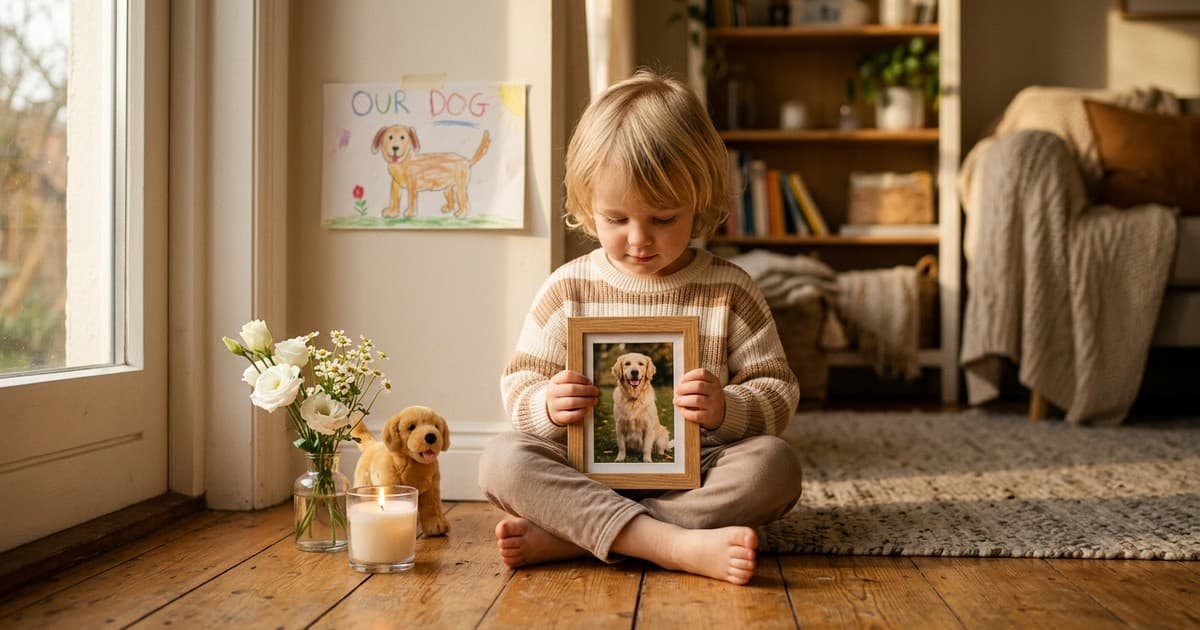
When a beloved pet dies, parents face a second, quieter challenge: telling their child. Many say they simply didn’t know what to say. For a lot of children, the loss of a pet is their first real encounter with death — which means the words we choose in that moment can stay with them for years.
Skip the euphemisms
Phrases like “he went on a long trip” or “she fell asleep” feel protective, but they tend to cause trouble later. A pet that “went on a trip” becomes someone worth waiting for, and a pet that “fell asleep” can make bedtime feel frightening. A short, honest sentence works better at almost any age: “Our dog was very sick, and now he’s in a place where he doesn’t hurt anymore. He won’t be coming back.” The word “death” sounds harsh to adults, but children usually take it more calmly than we expect.
Adjust for age
Ages 3–5
Young children don’t yet understand that death is permanent. Keep it short, keep it kind, and repeat: “He died, and he can’t come back, and we loved him very much.” If she asks the same question ten times, answer it ten times. That repetition isn’t a failure to understand — it’s how she processes the loss.
Ages 6–9
Children this age grasp that death is final, but they often turn it inward: “Did he die because I didn’t walk him enough?” Make it explicit, more than once, that nothing the child did caused this.
Ages 10 and up
Older children understand death much the way adults do, and they can feel hurt when adults hide their grief. Share your feelings honestly and invite them into whatever ritual your family chooses — a goodbye, a drawing, a memory box.
Grieve together
The instinct to hide your own tears from your child is natural, but watching you grieve is one of the healthiest lessons a child can receive: sadness is allowed, and it passes. Small rituals help children put their feelings somewhere. A goodbye at the burial or cremation, a crayon portrait, a box of the pet’s favorite toys — what matters is that the child is included, not shielded.
Questions children often ask
- “When is he coming back?” — Repeat that he can’t come back, gently and as many times as needed. It’s fine to add something comforting, like “he’ll always be with us in our hearts.”
- “Was it my fault?” — Say clearly that it wasn’t. Don’t leave this one to be inferred.
- “Am I going to die someday too?” — You don’t need a perfect answer. “That’s a long, long way away — right now, what matters is that we’re here together” is enough.
And in the weeks after, when your child still misses their friend, look through photos together and tell the old stories out loud. Pet World exists so that a beloved pet’s memory can stay close to the family — a quiet place to keep the pictures, the videos, and the stories. Being able to sit with your child, point at a photo, and say “remember that day?” may be the gentlest way to end the story you all shared.